
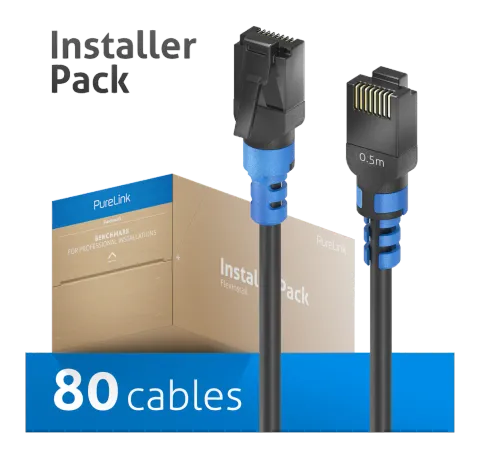
FI-PC100-005-PCK
Cat.6a Patch Cable, RJ45, U/UTP, black, 0.50m, InstallerPack 80pcs
The FI-PC100 is a Cat.6a U/UTP patch cable with gold-plated RJ45 connectors and high-purity Ø 3.6mm AWG28 copper conductors, supporting 10GBase-T Ethernet, HDBaseT, and bandwidths up to 500MHz. It features an …
ManualFAQSpecificationsDatasheetCE declaration ↗FAQ
What cable standards and performance specifications does the FI-PC100-005-PCK support?+–
The FI-PC100 supports Cat.6a with up to 500MHz for 10GBase-T Ethernet and HDBaseT. It features a cable standard of Cat6a and supports 10 Gigabit Ethernet with PoE++ (802.3bt) Type 4 at 48 V.
What are the physical characteristics and construction features of the FI-PC100-005-PCK cable?+–
The cable has a diameter of 3.6 mm, ultra flexible, ultra slim, smooth, and soft TPE jacket made of halogen-free thermoplastic elastomer. The conductor is solid copper with AWG 28 gauge and the cable has a minimum bending radius of 18.75 mm for both flexible and fixed installation.
What connectors are used on the FI-PC100-005-PCK cable and what special features do they have?+–
The cable has RJ45 male connectors on both ends with straight form factor, gold-plated contacts, polyvinyl chloride (PVC) connector housing, and lockable connectors following the T-568B (Cat. wiring standard).
What cable management accessories are included with the FI-PC100-005-PCK?+–
The product includes 2x Velcro cable tie and 2x removable blue strain reliefs.
Is the FI-PC100-005-PCK cable suitable for installations requiring low smoke and halogen-free materials?+–
Yes, the cable has a halogen-free TPE jacket and is compliant with IEC 60754-1 halogen-free fire class, which reduces smoke and toxic emissions, making it suitable for public spaces and safety-critical AV environments.
How can the strain relief be mounted or removed on the FI-PC100-005-PCK cable?+–
Slide the strain relief at an angle onto the cable ensuring ribs do not bend inwards, then slide it up towards the connector, pull the two hooks apart and twist them into designated holes. To remove, carefully release the hooks from the holes and pull the strain relief off the cable.